

Provençal Culture
Marquis
Coming from a Florentine family, settled in Comtat Venaissin in the 15th century, Folco de Baroncelli was born in 1869 in Aix en Provence. His first contact with bulls dates back to his childhood. The discovery of the Camargue will then seal his destiny, he will be a manager against all odds.
In 1895, he settled in the Camargue where he created the “Manado Santenco” in Saintes Maries de la Mer. In 1909, he created the Nacioun Gardiano and actively participated in the codification of the nascent Camargue Race and gave its letters of nobility to the Guardian. All the testimonies emphasize the great humanity and generosity of this man; but the striking trait of his character lies in his positions in favor of oppressed minorities. He defended the Gypsies for whom in 1935 he obtained the right to publicly honor their patroness Sara.
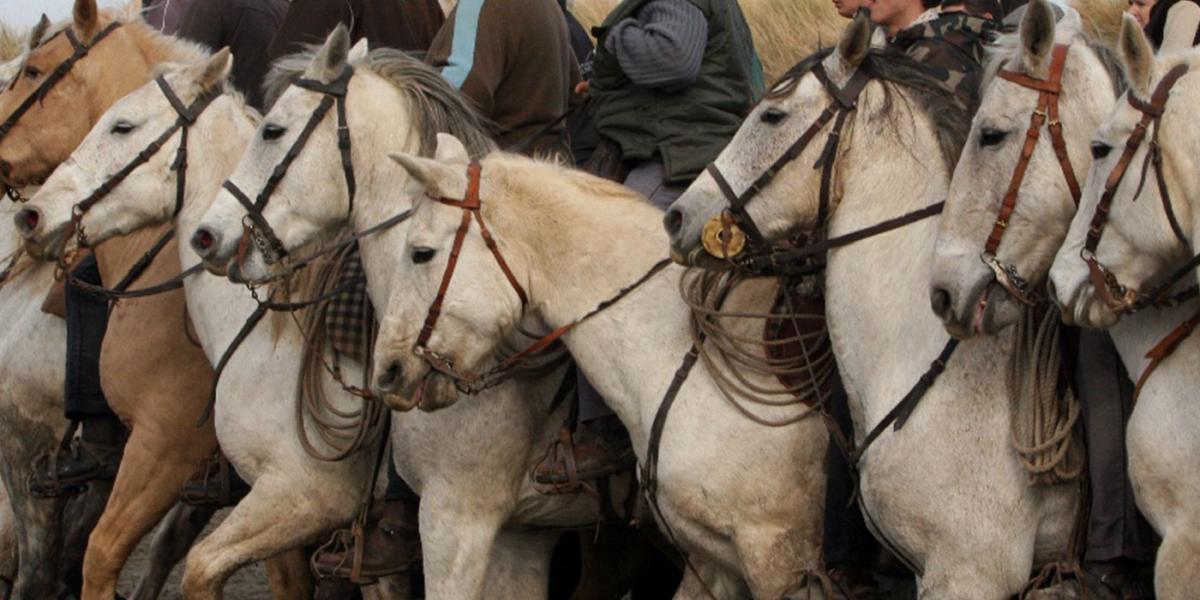
This is why, on May 26 each year, a day in memory of the Marquis is organized, in the presence of gypsies, folk groups and horse herdsmen.
La Festo Virginenco
Created by Frédéric Mistral in Arles in 1903 to revalorize the costume, the Felibre expressed the wish that each village also had its "Festo Vierginenco"
Today, only that of Saintes Maries has preserved this traditional day, and we owe it to the Marquis de Baroncelli who, until 1939, was the organizer and ensured its success.
The Nacioun Gardiano, faithful to the memory of the Marquis, has maintained its "Festo vierginenco" in Saintes Maries where it is very popular.
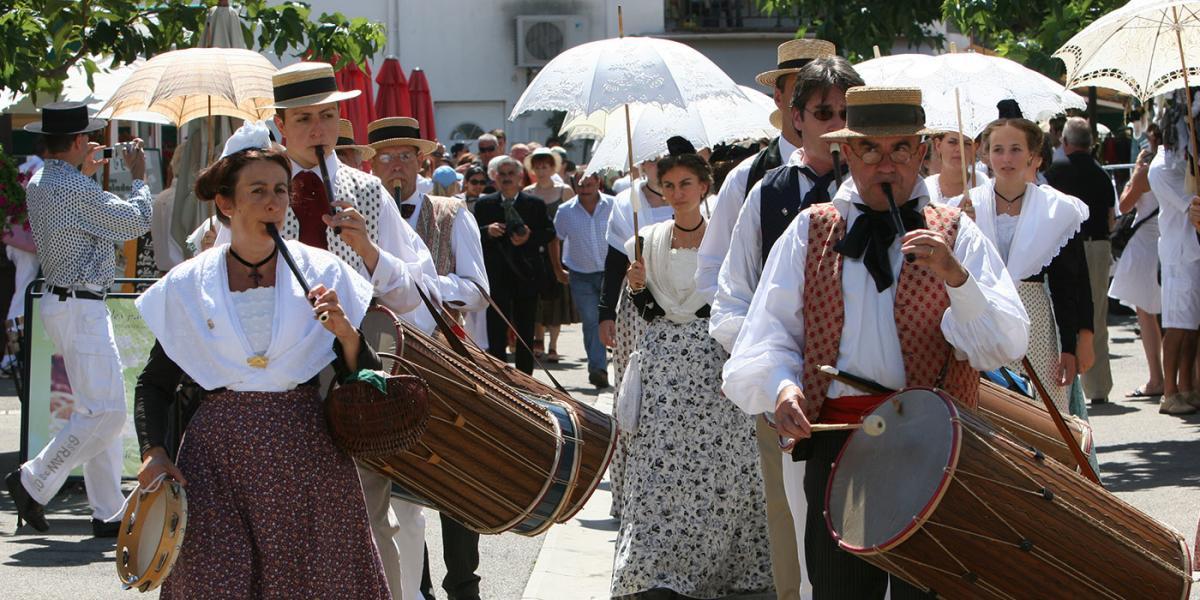
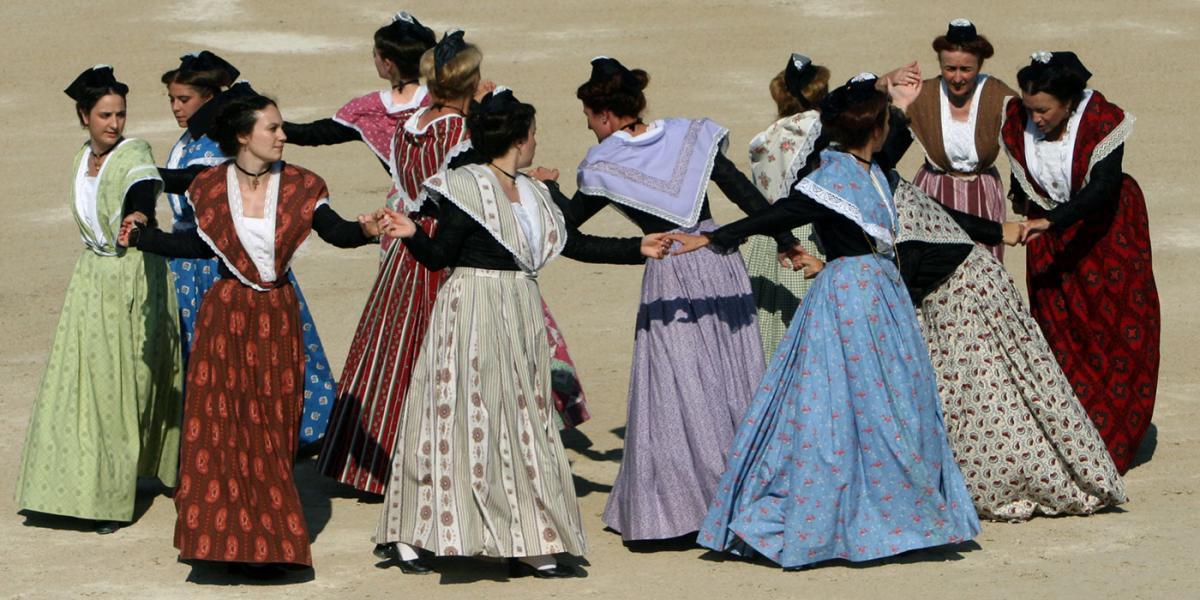
This is the opportunity for 15-year-old girls to wear the adult Arlesian costume and its famous ribbon for the first time.
The young girls ( Chatuno ) present themselves with their godmothers. They are dressed that day in a costume with a cotton skirt, a black eso, a white slip and a navy blue ribbon.
They receive a diploma decided by Frédéric Mistral and designed by Léo Lelée " As long as auren lou riban e la capello, lis Arlatenco saren li pu bello " and undertake to wear the costume, to share their knowledge with other young girls , to bring the costume to life.
The bull race, the equestrian games, the Provençal dances, the blessing of the foals in the arenas and the parade of young costumed girls constitute the main part of this day.
“Maintain and glorify the costume, the habits and customs of the Camargue and the bullfighting countries, continue the development of the Occitan language, propagate the Felibrean doctrine contained in the poetic works of Frédéric Mistral and his disciples”, such is the motto of the Nacioun Gardiano.
The cross
At the request of the Marquis Folco de Baroncelli, the painter and sculptor Hermann Paul created a work in 1926 symbolically associating the herdsmen and the fishermen, the two components of the people of Saintes Maries de la Mer
It symbolizes the three theological virtues:
- The Cross for Faith
- The Anchor for Hope
- The Heart for Charity
The 3 ends of the Cross are finished with tridents representing the herdsmen and the Camargue soul.
The original cross was made of wrought iron by Joseph Barbanson, a blacksmith in Saintes Maries de la Mer.
Inaugurated on July 7, 1926, it was initially installed opposite the current Grand Large and moved around ten years later to Pont du Mort at the western entrance to the village.

Maintenance
In the Camargue and Saintes Maries de la Mer in particular, it takes on a very special character since this event, created as its name indicates to “maintain” traditions, is located here in the heart of the cradle of the breed. This is an opportunity to honor the Camargue horse and bull, but also the Provençal language and traditional costume.
For several years, this day has honored a professional herdsman, thus paying tribute to these men who devote their lives to maintaining the breeding traditions and reputation of the herd.
Ferrade competitions, abrivado, are organized on the beach, without forgetting the traditional breakfast.