


Events Around La Bouvine
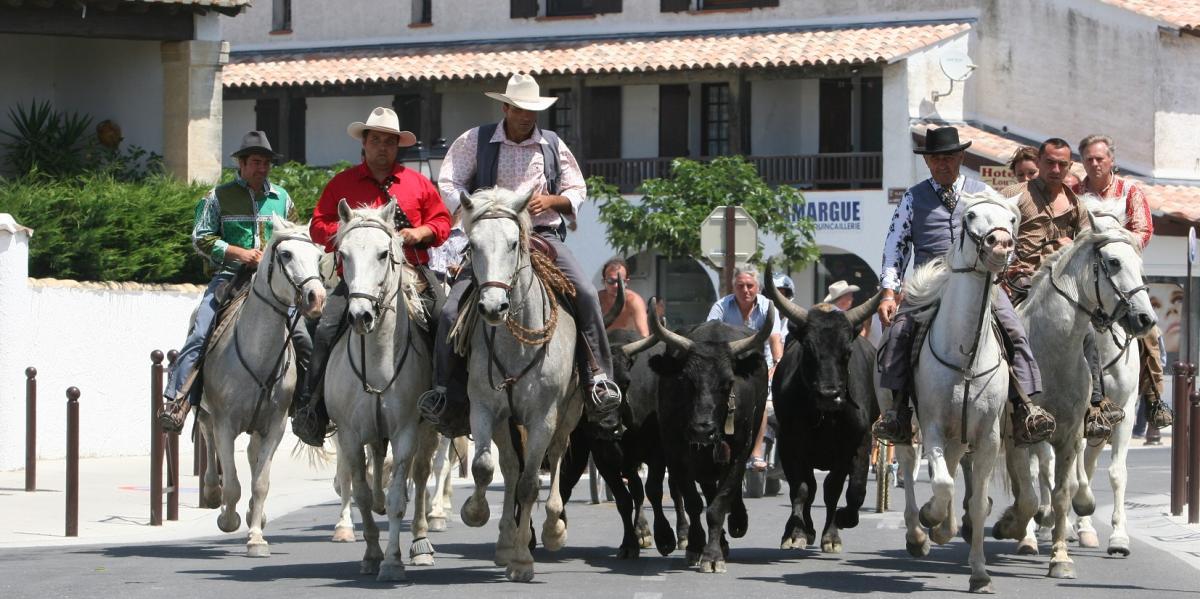
The Abrivado
The game is for the herdsmen to lead the bulls to the arenas and for the population to prevent them.
In Provence and Languedoc, for the patronal feast (votive feast) in the villages, the abrivado is considered by the celebrating population as the major spectacle of the planned festivities.
The seven bulls scheduled for the race for the cockade in the neighboring village are first sorted by the herdsmen of the herd. They leave their pasture walking at an accelerated pace, surrounded by herdsmen and followed by young riders and horse-drawn carriages, they enter the village. On an order from the baile guardian, the riders close in completely surrounding the bulls and leaving no passage between the horses. The young people of the village, howling and gesticulating, try to create the crack to make the bulls escape, who will then have only one idea in mind: to return to their pasture. It is then the opportunity for the herdsmen to demonstrate the skills and dexterity of their mounts and to catch up at full gallop in the streets of the village the escaped animals.
At the end of the 19th century, to go to a race in the Vaucluse or to the butcher's shop in Toulon, the bulls were moved at night and crossed cities like Marseille by the Cours Belsunce and the rue de Rome at a canter.
Since the appearance of transport by truck, the course of the Abrivado is most often limited to crossing the main arteries of the village before arriving at the bullring.
The Bandido
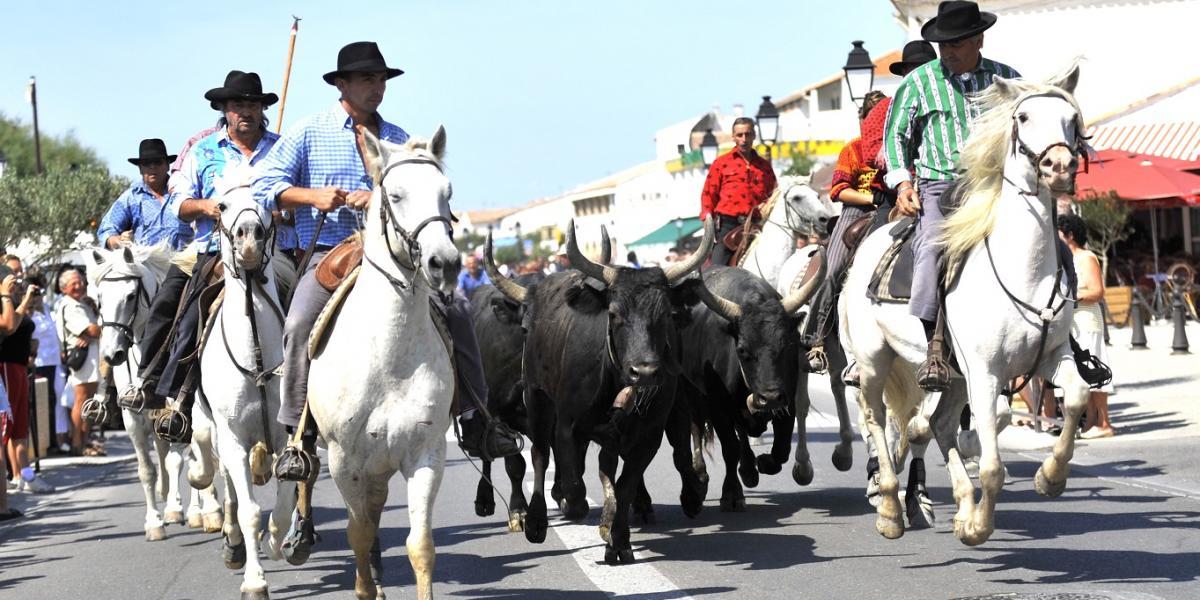
At the end of the race in the arenas, the Bandido brings the bulls back to the pastures, the bulls are let loose in the streets, preceded by riders and tumble into the village before regaining their freedom.
La Ferrade
A popular show today, the ferrade has always been practiced by bull owners to mark their animals.
This operation consists in imposing on the one-year-old calves (anoubles) the indelible mark (with a hot iron) of the owner. On this occasion, reinforcements of men are needed, the herdsman takes advantage of this to invite his friends there, and it is an opportunity for a joyful feast.
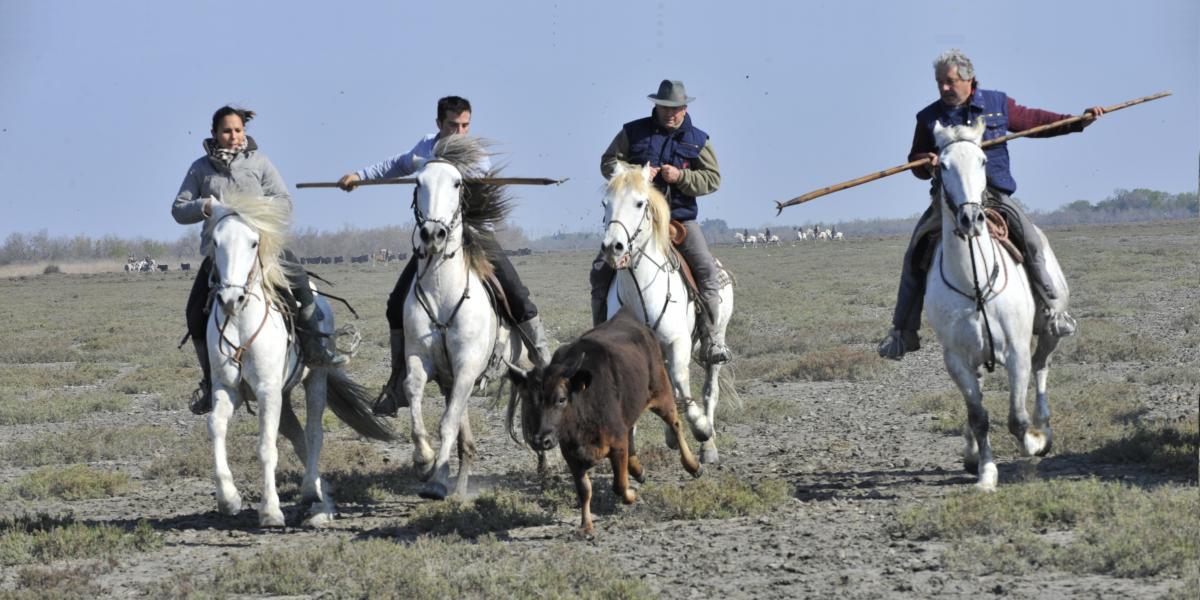
The ferrade takes place in the open field, the guardians sort the anouble then pursue it at full gallop to separate it from the herd by pushing it towards the guests, the guardian must then "drop" it with a blow of a trident applied to the hip .
Seized by the guests, the anouble will then be "escousuré" (notches on the ears) before being branded with a hot iron on the left thigh with the mark of its owner and on the side with its number.
The Roussataio
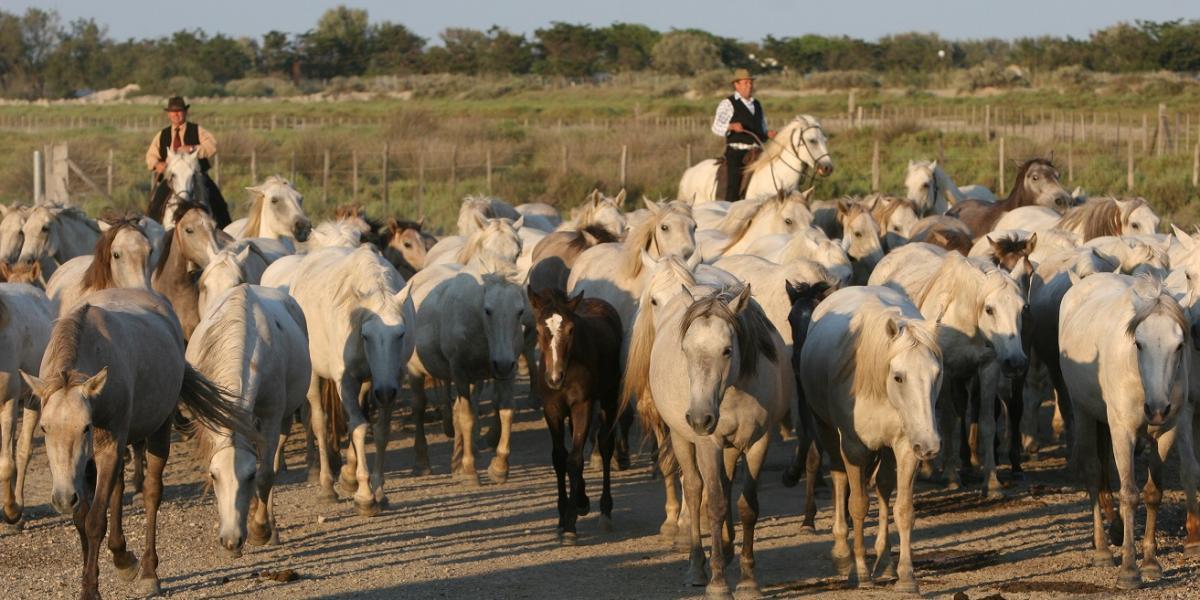
Very popular with the public, the roussataïo is increasingly present in the various festivals.
The herdsmen then accompany a herd of free mares which cross the village at a slow trot with their foals.